In April 2026, EIFL submitted comments for a public consultation organized by the Intellectual Property Office of the Republic of Serbia on the Draft Law on Copyright and Related Rights (2026). The amendments seek to harmonize Serbian law with two EU Directives (Directive 2012/28 on orphan works and Directive 2014/26 on collective management organizations), and to implement the Marrakesh Treaty for persons with disabilities into national law.
EIFL’s brief comments focused on four areas: implementation of the Marrakesh Treaty, orphan works, library lending, and the introduction of a secondary publication right.
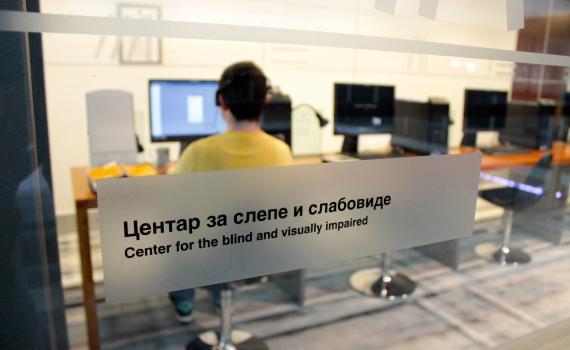
EIFL welcomed Serbia’s implementation of the Marrakesh Treaty that is a complete and faithful transposition of the treaty, including definitions, cross-border exchange of accessible format copies, record-keeping and authorized entities. We look forward to enactment of the draft law so that Serbia can take advantage of its accession to the Marrakesh Treaty in 2020.
On orphan works, EIFL made two recommendations to mitigate against the shortcomings of the orphan works Directive (that has largely failed in its objective to facilitate large-scale digitization of orphan works). In Article 71, the list of mandatory resources required for a diligent search (imported from the 2012 Directive) is outdated. Rather than hardwiring the list in national legislation, it should be placed in a by-law that can be updated from time to time, and it should be made explicit that resources that become outdated or no longer exist can be omitted from the search. We also encouraged implementation of the Digital Single Market Directive (DSM) that introduced new and more effective solutions for digitizing orphan works in Europe.
On library lending, we urged Serbia to avail of a derogation in the EU Directive on Rental and Lending Right to exempt certain types of libraries e.g. school, university, special libraries from the Public Lending Right (PLR) (the requirement to pay a fee for non-commercial lending). In Article 49, PLR is set out in very broad and general terms. Right now, it appears that PLR could apply to all types of libraries, all types of works, and to all types of authors. The library community will need to pay close attention to the design of the PLR system, the details of which will presumably be set out in by-laws or implementing regulations.
Finally, EIFL encouraged the introduction of a new secondary publication right (SPR) that gives authors (or their institutions) the legal right to make a work openly available after or in parallel to publication of a formal version. SPR is found in over half a dozen laws in Europe, and is on the policy agenda at European level. Serbia should take the opportunity to introduce its own SPR provision to benefit Serbian researchers (guaranteed public dissemination of research outputs), taxpayers (better value for investment in research and development), and society (increased impact of published research in areas such as medicine, biotechnology, energy and transport). An example of a provision on SPR that could be adapted for Serbian law is found in EIFL’s Draft Law on Copyright, 2025.
See the Draft Law on Copyright and Related Rights and Explanatory Memorandum (Serbian), and read EIFL’s response to Serbia’s public consultation.
SHARE / PRINT