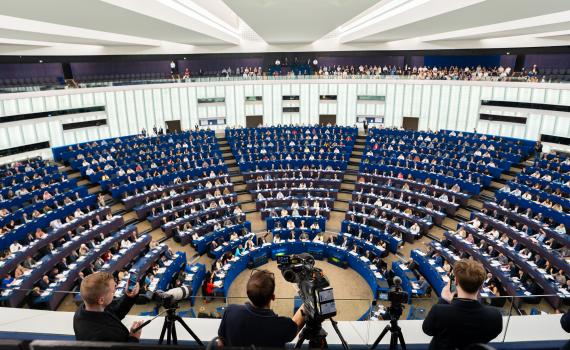
In an open letter to the European Parliament, EIFL joins over 35 organizations calling on the European Parliament to reject the introduction of actor-specific licences for access to public sector information and data in Europe. To address concerns about market dominance and unfair competition by very large enterprises, mechanisms for differentiated charging should instead be used.
A subtle, but far-reaching policy change
The move away from standard open licences (such as Creative Commons) through the introduction of differential licensing for different categories of uses will hinder access to public sector data for everyone, and risk unintended consequences for successful public interest projects, such as Wikipedia, Wikidata and OpenStreetMap. It also overturns a fundamental principle of “open by default” championed by the European Commission for more than two decades (introduced in the 2003 Directive on Public Sector Information, now known as the Open Data Directive).
The proposal to amend the Open Data Directive is part of a legislative package known as the ‘Digital Omnibus’, billed as introducing technical amendments to simplify and reduce compliance costs in EU privacy, data, cybersecurity and AI laws. However, in the case of public sector data, a subtle but far-reaching policy change is in fact in play.
Differentiated pricing, not licensing
EIFL calls on Members of the European Parliament to reject the introduction of actor-specific licences for the re-use of public sector data and documents (Article 32r(4)), and strengthen the requirement to use open licences as standard (Article 32r(3)). Concerns about companies with outsized market power unfairly exploiting open government and public sector data can be addressed through differential charging mechanisms that are set out in detail in Article 32q(6) of the proposed new Regulation. (For example, public sector bodies are permitted to charge large enterprises higher fees for collection, reproduction and data storage costs and, where applicable, measures to protect the confidentiality of the data or documents.) Introducing different licensing conditions on top of different pricing is unnecessary, and potentially harmful to those it is seeking to protect. Instead of reducing red tape for start-ups and small enterprises, it risks increasing it.
Background
The European Parliament is currently debating the EU's ‘Digital Omnibus’ package of legislative reforms designed to simplify and streamline Europe’s digital rulebook, reduce administrative burdens and lower compliance costs for businesses. While the Digital Omnibus on AI (amending the AI Act) is close to adoption by the Parliament, the remaining proposals amending European laws on privacy (General Data Protection Regulation) and public sector data (Open Data Directive) among others, are still in committee stage with adoption expected towards the end of 2026.
Read the Open Letter to the European Parliament here.
Read more
Digital Omnibus: Amendment proposals by COMMUNIA here.
What the Digital Omnibus means for Open Data by COMMUNIA, Creative Commons and Wikimedia Europe here.
SHARE / PRINT