The year was full of activities to support no-fee open access publishing. No-fee, also known as Diamond, open access publishing directly advances our mission of expanding access to knowledge. By removing financial barriers for both readers and authors, Diamond open access ensures that research is freely available to anyone, anywhere in the world.
With new funding from the European Commission for the ALMASI (‘Aligning and Mutualizing Nonprofit Open Access Publishing Services Internationally’) project, we were able to extend our collaboration with the Latin American Diamond open access publishing community. With our partners, we mapped the nonprofit publishing initiatives and services, and policy and funding models for Diamond open access publishing, in three continents (Africa, Europe and Latin America). During the year we proactively engaged with over 100 Diamond open access journals in Africa and also conducted numerous webinars and produced a variety of practical guides and training courses to support journal editors and communities of practice in Europe and Africa.
While negotiating with publishers for waived or discounted Article Processing Charges (APCs) to make publishing in open access affordable for authors in our partner countries, we observed that publishers were less willing to offer APC waivers. This tendency makes our work in strengthening Diamond open access publishing and open repositories, and the promotion of Rights Retention strategies and Secondary Publication Rights as efficient policy and legal instruments for making articles available in open access, even more important.
We have fostered an enthusiastic community of open science trainers, and in this report we feature our contribution to open science training and the work that members of this community are doing in their countries.
While we built researchers’ open access publishing, open data and open science skills, we also advanced basic ICT skills of school students. In Ghana, public librarians trained by EIFL built the digital and information literacy skills of over 11,300 students aged from 12 to 18, enabling them to use the internet meaningfully, safely and confidently.
Thank you to everyone — our partners, our funders, board members and staff — and we look forward to working with you in 2026.
Our vision is a world in which all people have the knowledge they need to achieve their full potential.
Using knowledge to change their lives and the lives of others
MUNICIPAL LIBRARIAN, EFFUTU LIBRARIES
GHANA
“The training and digital equipment we received through the project have transformed the work of our libraries, and improved digital literacy and online safety skills of thousands of children.”
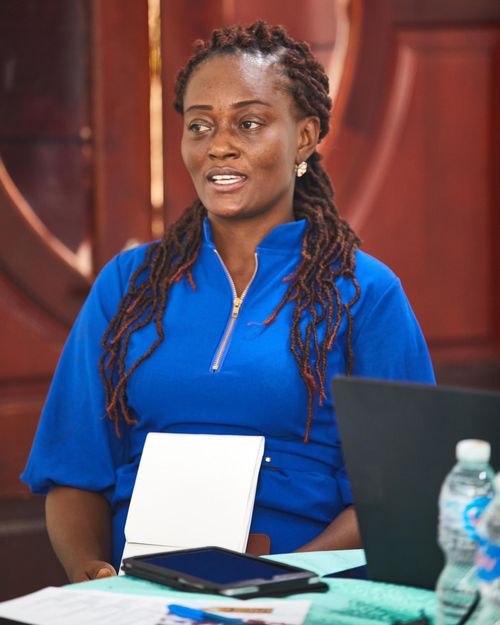
As head of Effutu Libraries in Ghana’s Central Region, Gifty Sey manages a network of 19 branch public libraries. Gifty frequently visits schools to engage students in digital reading and other digital skills programmes that the libraries offer. “I also train staff in the branch libraries, and they are also conducting digital skills classes in their local schools,” she says.
Effutu Municipal Library is one of 15 regional and municipal libraries taking part in the Digital learning @ Ghana public libraries project, implemented by EIFL and the Ghana Library Authority.
“Before the project, we were running very low scale digital skills programmes, teaching basic skills limited to the school curriculum — Word, Excel, PowerPoint, how to type — in just a few schools. Now we are reaching out to more schools, with an expanded range of skills and knowledge.
“EIFL introduced us to free and open online tools that we use to build the children’s skills — like Canva (graphic design), Rangers (coding), web development software and interactive reading apps. We have classes on recognizing misinformation and disinformation online, and about online safety,” says Gifty.
“The children especially love the reading apps because they make reading fun by correcting punctuation, and with quizzes and spelling tests. We have just a few tablet computers that we bring to schools, and after school hours, the children rush to the library to make sure they are first in the queue to continue to read,” says Gifty.
By the end of 2025 the Digital learning @ Ghana public libraries project had trained 30 librarians from the 15 libraries, who built digital literacy skills of over 19,000 Junior and Senior High School students in short outreach visits to schools and in-depth workshops in libraries.
Find out more about EIFL's Public Library Innovation Programme
DIRECTOR, B.P. HASDEU MUNICIPAL LIBRARY
MOLDOVA
“Strong copyright exceptions and limitations are necessary for freedom of expression, democratic engagement, education and community development, and librarians are well placed as effective advocates for the public interest.”
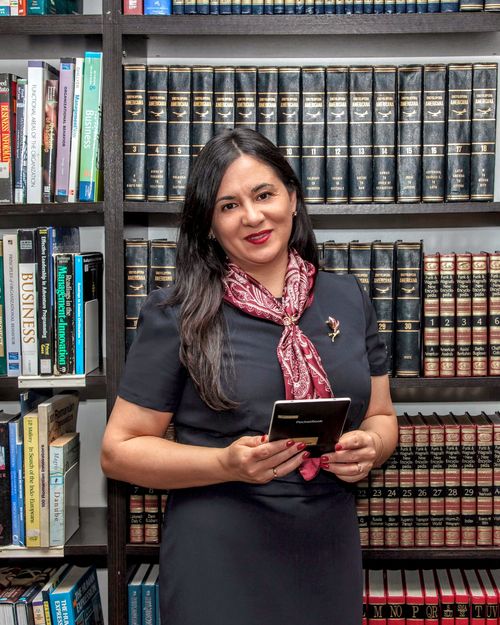
In 2003, Mariana Harjevschi was nominated by REM — Electronic Resources for Moldova Consortium — to serve as EIFL’s Copyright Coordinator in Moldova. Mariana had recently begun working in Moldova’s first public library specializing in law, and through training and mentorship from EIFL, she quickly developed a knowledge of copyright issues.
Mariana also organized the translation into Romanian of EIFL resources on copyright, such as EIFL’s Handbook on Copyright and Libraries and the Copyright for Librarians curriculum, so that librarians throughout Moldova could benefit (the curriculum was incorporated into library and information science programmes at Moldova State University).
Under Mariana’s leadership, REM actively engaged with AGEPI (the State Agency on Intellectual Property) during copyright law reviews. As a result, copyright law amendments adopted in 2011 and 2022 contain many positive library provisions. “I am passionate about ensuring that copyright acts as a force for good in Moldova. We value our relations with AGEPI in developing practical solutions to the legal challenges that libraries face in digitizing material, managing databases and introducing new digital research tools.”
In 2026, the copyright law is set to change again as Moldova readies itself for EU membership. Mariana’s knowledge, leadership and experience will help to ensure that the new law aligns with the best of European legislation to benefit education, research and digital inclusion, as the country looks towards a new future within an enlarged European Union.
Find out more about EIFL's Copyright and Libraries Programme
HEAD OF HUMAN CAPITAL DEVELOPMENT, UGANDA NATIONAL COUNCIL FOR SCIENCE AND TECHNOLOGY
UGANDA
“The open science policy positions UNCST as a leader in championing open science practices, fostering greater accountability, collaboration and innovation within Uganda’s research landscape.”
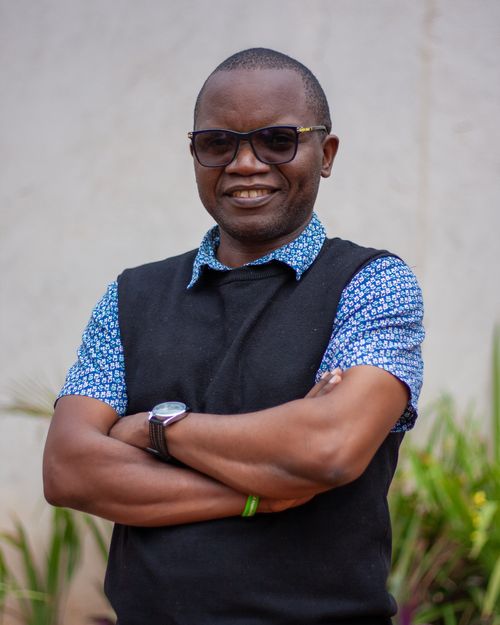
When Steven Sebbale joined the Uganda National Council for Science and Technology (UNCST) in 2009 as a research intern, open science was just starting to be known in Uganda. In 2023, as Head of Science Policy he led the development of an open science policy that was formally adopted by the UNCST Board in 2025 following an extensive and participatory stakeholder engagement process.
“We sincerely appreciate EIFL’s invaluable expertise and financial support throughout this process. Your partnership was instrumental in enabling UNCST to convene multiple consultative workshops with researchers, policy makers, institutional leaders and civil society stakeholders from across Uganda. These engagements have ensured that the policy reflects the diverse voices and priorities of our national science and innovation ecosystem, said Steven.
UNCST regulates, monitors and evaluates all aspects of science, technology, and innovation (STI) in the country; translates STI policies into regulations and standards to guide the operations of the entire STI system; and provides continuing professional development for researchers.
As the national clearing house for research, UNCST plays a key role in reviewing, and registering research proposals to ensure that they meet ethical and scientific standards. “On average, we review about 1,800 to 2,500 research projects annually. These projects are now required to be carried out in compliance with the UNCST open science policy,” said Steven.
Find out more about EIFL's Open Access Programme
ELECTRONIC SERVICES LIBRARIAN, AMERICAN UNIVERSITY OF CENTRAL ASIA
KYRGYZSTAN
“Being a member of EIFL is a great benefit for academic libraries. Free access to e-resources from international publishers significantly supports our researchers and scholars. Very few universities in my country have budgets to subscribe to foreign e-resources.”
EIFL began working with the Kyrgyzstan Library Information Consortium (KLIC) in 1999.
In 2021 Tolgonai Kozhokanova was nominated by KLIC to serve as EIFL Licensing Coordinator for Kyrgyzstan. In this role, Tolgonai has different responsibilities.
“My main role is to inform consortium member libraries about the availability of EIFL-negotiated e-resources. I encourage and help our members to promote and use these e-resources. I act as a bridge between EIFL and KLIC members — if a member has difficulty with subscriptions or licensing, I can ask the licensing team at EIFL to advise,” says Tolgonai.
Over 50 KLIC member institutions subscribe to e-resources negotiated by EIFL. In 2025, KLIC members were eligible to subscribe to 40 EIFL-negotiated e-resources from eight publishers, at no cost, including e-book collections, journals and online databases. Since Tolgonai’s appointment as EIFL Licensing Coordinator, the number of subscribers and the usage of these e-resources has grown steadily.
“EIFL also negotiates free and discounted Article Processing Charges (APCs) for authors to publish articles in open access, and I make sure that these opportunities are promoted too. After a series of webinars that we organized with EIFL in 2025, our researchers have become more aware about EIFL’s open access publishing agreements,” says Tolgonai.
In 2025 authors in Kyrgyzstan published 39 articles in fully open access journals of seven publishers, compared to 14 articles in journals of five publishers in 2024. In 2025, authors and institutions saved US$81,825 through APC waivers and discounts.
Find out more about EIFL's Licensing Programme
“What I especially like about EIFL’s training and resources, is how they marry open science theory with practical skills. Open science can sometimes be very abstract. But EIFL’s training makes it practical and interesting.”
- Eglė Juodė, Information Manager at the Department of Scientific Information and Data at Vilnius University, Lithuania
To support research, teaching and learning, EIFL advocates for an enabling policy environment for open science, the establishment of open public infrastructures for the publication and sharing of research in open access (OA), organizes train-the-trainer activities and develops resources to support open science training.
Open science is an approach that makes research processes and data open and transparent at all stages of the research, from planning to dissemination of results. It has become widely recognized as contributing to better and more efficient science and innovation. Major European research funders, like the European Commission (EC), and growing numbers of national research funders now mandate or encourage open science for the research they fund. In 2021 EIFL took part in drafting the UNESCO Recommendation on Open Science, and contributed to the toolkit developed to facilitate implementation of the Recommendation. As a result of these developments, the need for open science training surged.
EIFL began conducting OA publishing training in 2004, and has steadily expanded training to include a broader range of open science skills and competencies — for example, research data management and sharing and other digital research skills.
Since 2017 EIFL has focused on training open science trainers in Europe (as part of EC-funded projects) and in EIFL partner countries. We led the training in two major European open science initiatives, the FOSTER project and OpenAIRE, and participated in the EOSC Future, DIAMAS and ALMASI projects as course developers and trainers.
We organized webinars on open science topics and skills, week-long online and in-person bootcamps, and developed resources to support open science trainers. A particularly well used resource was the EIFL Research Literacy Training Programme Outline for Librarians, and we published a third edition in 2025. In 2024 we began building a Community of Practice (CoP) for open science trainers in our partner countries that today counts over 80 members. We host monthly meet-ups for CoP members to share training experiences and support each other.
We asked open science trainers from EIFL’s network to share their experiences of providing open science training in their countries.
Getnet Lemma Tefera is a professional librarian at Addis Ababa University (AAU) Libraries and a lecturer at AAU. He is also EIFL OA Programme Coordinator for the Consortium of Ethiopian Academic and Research Libraries (CEARL), EIFL’s partner library consortium in Ethiopia.
Getnet recalls EIFL’s long-term partnership with CEARL, dating back to 2008, and involving several projects. Among these projects was the development of a three-module open science course that is still being used for training of researchers, PhD students and librarians in CEARL member institutions.
AAU Libraries provides researcher training twice a month. “The training is usually related to open science — research data management (RDM), archiving data and articles in OA repositories, and publishing in OA journals. Mostly, our learners are early career researchers. On average we have 200–300 students per session. Training can be longer than two hours, and for practical sessions we use the computer lab. We also regularly provide training for librarians and research administrators, because they are the people who support the science community.”
Open science training is making its mark, said Getnet. “These days, you can meet any researcher and start a discussion on open science, and they can engage. In the past, some researchers were hesitant to publish in OA because they thought the quality was poor. Through our training and awareness-raising, this has changed.”
“Through EIFL’s training we learnt about the importance of data repositories for sharing research data. We drafted a policy that was approved by the university, that tasked AAU Library to conduct RDM training for AAU research grant recipients. Archiving is increasing, and we now have over 500 datasets and 57 dataverses in the AAU Research Data Repository.”
In Zimbabwe, Josiline Chigwada is University Librarian at Chinhoyi University of Technology (CUT) and also serves as EIFL OA Programme Coordinator in Zimbabwe. In addition to providing open science training for faculty and students at CUT, Josiline organizes and conducts training for the 20 member institutions of the Zimbabwe University Libraries Consortium (ZULC), EIFL’s partner library consortium.
“In the early years, our concern was the establishment of institutional OA repositories and OA publishing. Through a project with EIFL (2005) we established an institutional repository at the University of Zimbabwe. This was the first in the country and today, after much advocacy, awareness-raising and training, all ZULC member universities have institutional repositories. Our focus is now more ensuring that the repositories are well used, and our training for faculty, students and librarians also includes RDM.
“As part of my own learning I regularly attend the EIFL CoP open science trainers’ meet-ups. Engaging with open science trainers from other countries is very useful for me. During the discussion people share best practices and what has worked for them; challenges and how they have dealt with them. So if you look at it from the Global South perspective, most of us are facing the same challenges and solutions will be similar too.”
Richard Bruce Lamptey, College Librarian at the College of Science at Kwame University of Science and Technology (KNUST), is EIFL Country Coordinator in Ghana, and also regularly attends meetings of the EIFL CoP for open science trainers.
“The meet-ups provide opportunities to learn new training methods, from trainers in different countries. I have had valuable input into how to motivate senior researchers to practice open science, how to advocate with managers for institutional support, and approaches for integrating open science into policies and academic curricula.”
An experienced open science trainer, Richard has provided training, mostly for early career researchers and PhDs at KNUST, on OA and responsible publishing; research quality and journal evaluation; grant writing with open science compliance; reference management tools, and AI and research. In addition, Richard provides introductory open science training during annual induction courses that are mandatory for newly-hired university staff. “We train about 100 new staff a year, and as they get into their jobs, they come back for further open science training,” he said.
Eglė Juodė, Information Manager at the Department of Scientific Information and Data at Vilnius University (VU), and Marjan Monshi, a data manager at Kaunas University of Technology (KTU) library and PhD candidate at the Institute of Materials Science at KTU, conduct open science training for faculty and students at their universities. Both are active participants in the EIFL CoP for open science trainers and regularly attend the monthly meet-ups.
In 2022, VU adopted an open science policy, and followed up with a policy implementation plan in 2023 that makes VU Library responsible for providing open science training. The April 2025 update of KTU’s open science policy includes mandatory Data Management Plans (DMPs) for PhD students. In addition, in 2025 the Research Council of Lithuania (RCL) made open publishing of articles and data mandatory for all RCL-funded research.
All these developments have escalated the demand for open science training.
Eglė estimates that VU library’s Department of Scientific Information and Data trains an average of 500–1,000 people a year, with requests coming from all directions. “Requests can come from the top, for example, the university management asked us for training on the RCL requirements. Sometimes the need comes from researchers, for example if I get questions on the same topic over and over, I organize training on that topic. We also train and set assignments involving open science for many PhD candidates.
“When I started working at the library, I did not even know what open science was. I learnt a little bit from everywhere, from conferences, videos on YouTube. I used resources from the FOSTER open science website, OpenAIRE and EIFL.
“Through participating in the EIFL CoP meet-ups for open science trainers I learnt how to make my online training interactive. A training session on data management led by Milica Ševkušić (EIFL OA Programme Project Coordinator) stands out. Both her outlook and the way she structured training were inspiring. I now plan training using her structure, and I often use Mentimeter (an interactive training tool that engages learners), especially with PhDs.”
Marjan learnt her open science skills while completing an RDM course for PhDs that KTU Library developed with support from EIFL. “It was through this course that I began my open science journey,” said Marjan. “For the first time, I wrote a DMP and learnt how to properly store, manage and share my research data.”
Marjan wanted to be involved in tasks related to open science because she understood its relevance. When the KTU Library announced that it was looking to hire a data manager to join its team, Marjan applied and was hired for the position. The library also engaged her in training researchers. “To learn more about open science, I joined the OpenAIRE train-the-trainer Bootcamp. This event was transformative — we learnt the theory and practice of open science, and also how to train researchers.
“Now, for me, the most important space for learning about training is the EIFL CoP open science trainers meet-ups. The participants are from different countries in Europe and Africa, and we openly discuss the challenges we are facing, and share solutions and best practices. I also share resources that I receive from the meet-ups with the librarians and the other data managers at KTU. One of the most useful resources is the EIFL Digital Research Literacy Training Programme Outline for Librarians.
“Inspired by the collaborative spirit of the EIFL meet-ups, we have activated our Open Science Community at KTU with monthly meet-ups with researchers,” said Marjan.
In Serbia, there is an informal but well-organized community of 70–80 open science trainers, mostly consisting of research librarians. Two energetic contributors to this community are Ljiljana Radisavljević, Librarian at the Institute for Vegetable Crops, and Obrad Vučkovac, Head of Library Services and Repository Manager at the Vinca Institute of Nuclear Science, University of Belgrade. In addition to providing open science training in their institutes, Obrad and Ljiljana train nationally in Serbia and both have trained at regional and international open science training events organized by EIFL. They are also regular participants in the EIFL CoP meet-ups of open science trainers.
The informal trainers’ group in Serbia provides a safe environment for younger or less experienced trainers to practise their training skills, give presentations to more experienced trainers, and receive suggestions for improvement.
“I cannot say enough how important the connection with EIFL is. I feel much closer to people doing the same thing all over the world,” said Ljiljana.
Both Obrad and Ljiljana emphasised the importance of the resources created or co-created by EIFL in their training. “EIFL develops resources with the real-world constraints faced by trainers in less wealthy countries in mind, helping the trainers to deliver high-quality training despite limited funding and staff capacity,” said Obrad.
In 2024 the government of Serbia adopted the Open Science Platform 2.0, which updates the original 2018 policy. The policy mandates OA to all publications and research data resulting from publicly-funded research, and requires institutions to align with these principles.
“After that, our open science training became more dynamic; researchers would bring practical questions to training, for example, ‘We are about to publish, what can we do to make it open science?’ and we would work with them to find solutions,” said Ljiljana.
EIFL income and expenditure 2025
| INCOME, CARRY FORWARD, RESERVES | € | % | |
|---|---|---|---|
| Programme income | 809,565 | 26.9% | |
| Participation fees | 59,310 | 2.0% | |
| General Support Funds and Reserve | 2,110,298 | 70.1% | |
| Sponsorship, interest and other income | 31,930 | 1.0% | |
| Total | 3,011,103 |
| EXPENDITURE | € | % | |
|---|---|---|---|
| Programme delivery | 1,092,864 | 90.1% | |
| Personnel & contracted expenses | 84,534 | 7.0% | |
| Operating expenses | 35,124 | 2.9% | |
| Total | 1,212,522 | ||
| Committed expenditure for 2026–2029 Programme delivery, General Support Funds and Reserves | 1,798,581 |
ORGANIZATIONS
We would like to thank the following organizations for their generous support for our work in 2025.
EIFL (Electronic Information for Libraries) is an international not-for-profit organization that works with libraries in developing and transition countries to enable access to knowledge for education, learning, research and sustainable community development.
In 2025, EIFL worked in partnership with library consortia in 36 countries. We have also run projects in an additional 24 countries where we do not have library consortia.
Meet our Staff, Management Board and Network.
EIFL has built relationships with a wide range of organizations to increase access to knowledge. In 2025, we worked with the following partners:
In 2025, EIFL organized, supported or took part in 138 events, workshops and conferences about issues that affect access to knowledge.
* Cover: Reading room in the National Library of Armenia, designed by Alexander Tamanyan in 1939. * Vision: Photo by Ghana Library Authority. * Meet the people: Photo by Augustinas Zukovas. * Gifty Sey: Photo by Ghana Library Authority. * Spotlight: Photo by Jonas Klėmanas. * Finance: Photo by Ghana Library Authority..